



_1.png)
Why a Tax Season Property Checklist Matters
Disclaimer: We are not licensed tax advisors, and the information provided here is for general educational purposes only. It should not be considered tax, legal, or financial advice. Please consult a qualified tax professional or licensed advisor regarding your specific situation.
Rental property taxes involve income reporting, expense tracking, depreciation, and documentation. Missing records can lead to lost deductions or compliance issues.
Following guidance from the Internal Revenue Service (IRS), property owners must report rental income and can deduct ordinary and necessary expenses related to managing and maintaining their rental property.
Preparation helps ensure:
Accurate reporting
Maximum eligible deductions
Clean financial records
Faster tax filing
Reduced audit risk
1. Gather Your Rental Income Records
Start by confirming all income received during the tax year.
Include:
Monthly rent payments
Late fees
Lease cancellation fees
Parking or storage fees
Laundry or service income
Insurance reimbursements (if applicable)
Tip: Match bank deposits with rent records to ensure nothing is missing.
2. Organize Deductible Property Expenses
Most operating costs for managing rental property may be deductible if they are ordinary and necessary.
Common categories to review:
Operating expenses
Property management fees
Advertising and marketing costs
Office supplies
Software subscriptions
HOA fees
Maintenance and repairs
Plumbing repairs
Appliance fixes
Painting or patching
Landscaping
Cleaning services
Professional services
Accounting fees
Legal services
Tax preparation
Utilities paid by owner
Water
Electricity
Gas
Trash removal
Internet for common areas
Keep receipts, invoices, and payment confirmations.
3. Review Capital Improvements
Improvements that increase value or extend useful life are usually not deducted immediately. Instead, they are depreciated over time.
Examples:
Roof replacement
HVAC installation
Major renovations
Structural additions
New flooring throughout the property
Record:
Date placed in service
Total cost
Description of improvement
4. Update Property Depreciation Records
Depreciation is one of the most significant rental property tax benefits.
Make sure you have:
Original purchase price
Allocation between land and building
Depreciation schedule
Improvements added during the year
If you purchased or sold property this year, document closing statements and dates carefully.
5. Verify Mortgage and Financing Documents
If your property has financing, gather:
Mortgage interest statements
Loan origination fees (if applicable)
Refinancing documents
Private mortgage insurance payments
Interest is commonly deductible, but accurate documentation is essential.
6. Track Insurance and Property Taxes
Collect records for:
Property insurance premiums
Liability coverage
Flood insurance (if applicable)
Real estate property taxes paid
These are typically deductible operating expenses.
7. Document Travel and Mileage
If you travel for property-related purposes, track:
Mileage logs
Dates and purpose of trips
Parking and tolls
Travel receipts
Examples:
Property inspections
Meeting contractors
Showing units
Purchasing supplies
Maintain detailed records to support deductions.
8. Prepare Tenant and Lease Documentation
Keep organized copies of:
Signed lease agreements
Security deposit records
Refunds or deductions
Move-in and move-out inspections
Security deposits are generally not income unless retained, so tracking them properly matters.
9. Review Year-End Financial Statements
Before filing, generate:
Profit and loss statement
Expense summary by category
Cash flow report
Balance sheet (if applicable)
These provide a clear financial picture and help identify missing transactions.
10. Confirm Compliance and Deadlines
Verify:
Filing deadlines
Required forms for rental income reporting
Local or state tax requirements (if applicable)
If you own property in multiple locations, each jurisdiction may have different rules.
11. Consult a Qualified Tax Professional
Tax regulations change, and rental property situations can become complex—especially with multiple properties, partnerships, or recent purchases or sales.
A tax professional can help:
Confirm eligible deductions
Apply correct depreciation methods
Ensure compliance
Identify tax-saving strategies
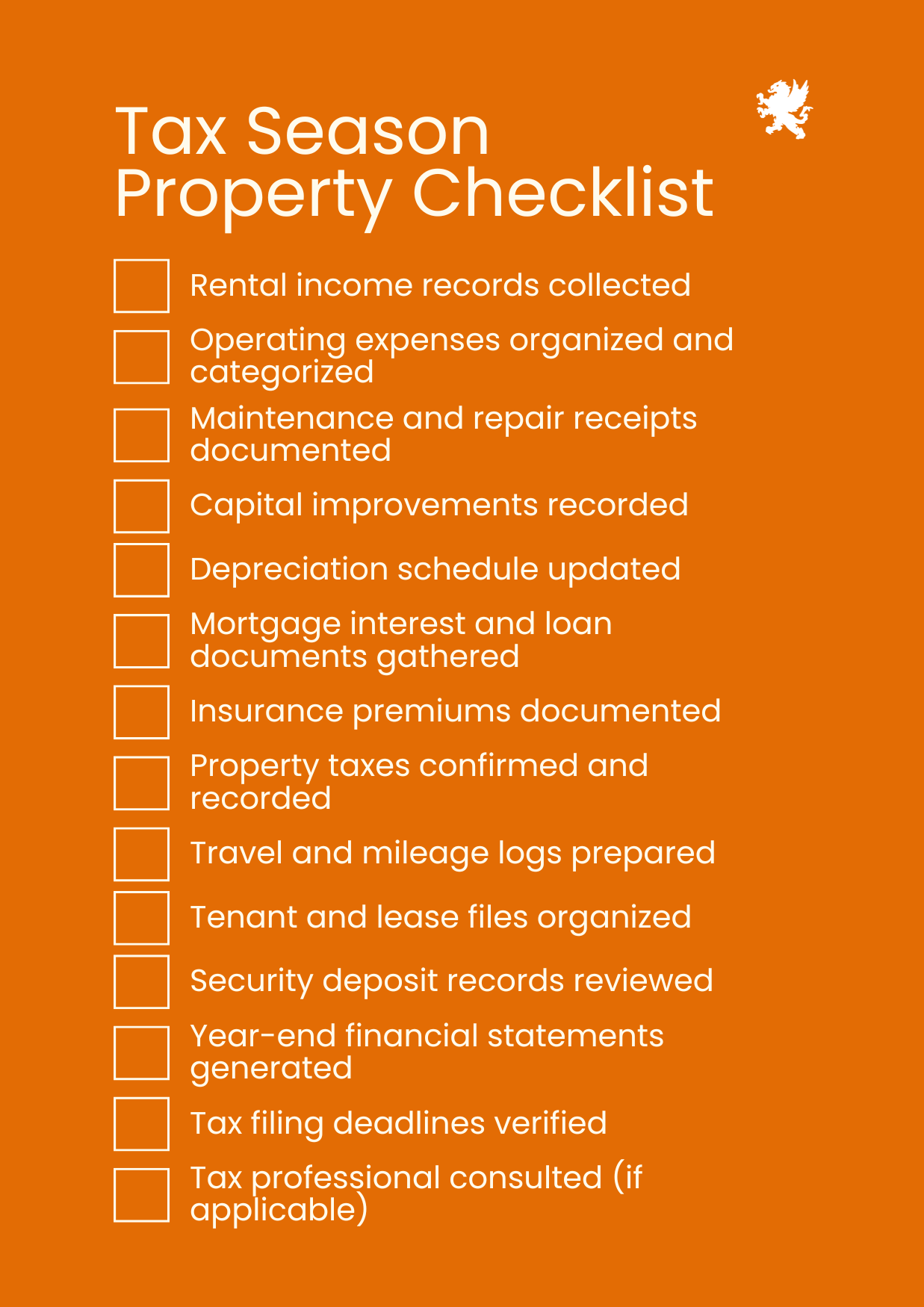
Final Preparation Checklist (Quick View)
Final Thoughts
Tax season does not have to be stressful for property owners. With consistent record-keeping throughout the year and a structured checklist, filing becomes faster, more accurate, and financially beneficial.
Good organization today protects your investment tomorrow.